HOW GST Compliance can help in reducing cost & improving profitability?
Effective GST (Goods and Services Tax) compliance is crucial for businesses aiming to optimize operations and improve profitability.
GST is not a one-time registration — it's an ongoing compliance obligation that touches every invoice you raise, every purchase you make, and every return you file. Get it right, and your input tax credits flow smoothly, your working capital stays intact, and your business remains audit-proof. Get it wrong, and you're looking at blocked credits, late fees, interest, and notices.
BC Shetty & Co is a trusted GST consultant practice serving businesses across Mysore and the broader Mysuru district. From GST registration for new businesses to monthly return filing, annual audits, and demand management, our team handles the full compliance lifecycle — so GST never becomes a distraction from your core business.
We offer end-to-end GST services for businesses across Mysore — from day-one registration to complex litigation.
| GST Service | What We Cover |
|---|---|
| GST Registration | New registration under Regular or Composition scheme; GSTIN in 3–5 working days |
| GST Return Filing | GSTR-1, GSTR-3B (monthly/quarterly); GSTR-4 for Composition dealers |
| Annual GST Return (GSTR-9) | Reconciliation of all supplies, credits, and tax paid for the full financial year |
| Input Tax Credit (ITC) Reconciliation | GSTR-2B vs books reconciliation; ITC maximisation and mismatch resolution |
| E-way Bill & E - Invoicing | Advisory and support for e-way bill generation and compliance and E - Invoicing Generation |
| GST Amendment & Modifications | Changes to registration details, business structure, or address |
| GST Refund Claims | Export refunds, inverted duty structure refunds, and excess cash ledger claims |
| GST Notice & Demand Management | Responding to show-cause notices, ASMT-10, DRC-01, and departmental audits |
| LUT Filing | Letter of Undertaking for zero-rated export of goods and services without payment of GST |
| GST Advisory | Sector-specific guidance on applicable rates, exemptions, RCM, and ITC eligibility |
Many business owners treat GST as a box-ticking exercise. It's much more than that.
Our GST engagement runs on a monthly cycle — from first registration through return filing, ITC maximisation, and annual reconciliation, with ongoing advisory and notice support throughout.
GST Consulting ProcessBC Shetty & Co · Mysore |
|
|---|---|
| 1. GST registration | Document collection, portal application filing, officer liaison if needed. GSTIN delivered in 3–5 working days. |
| 2. Return filing setup | Map accounting data to return format. Set GSTR-1 and GSTR-3B monthly/quarterly calendar based on turnover and scheme. |
| 3. ITC reconciliation | Monthly GSTR-2B vs purchase register matching. Mismatch resolution and supplier follow-up before annual window closes. |
| 4. Return filing & payment | File GSTR-1 and GSTR-3B within deadlines. Compute net liability after ITC utilisation. Confirm payment via cash/credit ledger. |
| 5. Annual return & audit (GSTR-9 / 9C) | Full-year reconciliation of all supplies, credits, and tax paid. CA-certified GSTR-9C reconciliation statement where applicable. |
| 6. Ongoing advisory & notice support | GST rate change alerts, ASMT-10 and DRC-01 responses, refund claim management, and LUT renewal. |

Deep understanding of Mysore’s business ecosystem, combined with modern advisory practices.

Known for reliability, accuracy, and ethical practices.

We use advanced tools for real-time reporting, compliance tracking, and analytics.

Customized strategies tailored to your industry challenges.

From compliance to strategic advisory everything under one roof.
BC Shetty & Co GST consultant services in Mysore cover businesses across a wide range of sectors:

GST on goods, job work provisions, e-way bill compliance,
and capital goods
ITC.

Composite supply vs mixed supply, input service distributor compliances, and Composition scheme suitability.

Place of supply rules for technology services, export of services, LUT filing,
and GST refund on exports.

GST on under-construction properties, JDA tax implications, works contract, and ITC restrictions under Section 17(5).
Effective GST (Goods and Services Tax) compliance is crucial for businesses aiming to optimize operations and improve profitability.
Every GST registered taxpayer must file at least one or more designated GST returns on time.
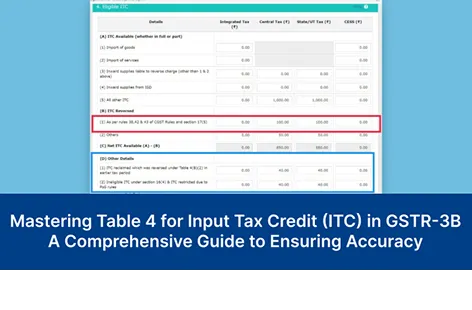
Significant modifications regarding GST returns and Input Tax Credit reporting explained.
GST registration is the process of enrolling your business with the Goods and Services Tax Network (GSTN) to obtain a unique 15-digit GSTIN. Once registered, you are authorised to collect GST from customers, claim Input Tax Credit on your purchases, and file periodic returns. In Karnataka, GST registration is mandatory if your aggregate annual turnover exceeds ₹40 lakhs for goods or ₹20 lakhs for services. Registration is also mandatory regardless of turnover if you make inter-state supplies, sell through e-commerce platforms, or are liable to pay tax under the Reverse Charge Mechanism. Businesses below the threshold can register voluntarily — which is often commercially advantageous.
The standard documents required for GST registration for a business in Mysore are:
Our team collects and reviews all documents before filing to avoid rejections or officer queries.
Late filing of GST returns has a direct financial cost. For GSTR-3B, the late fee is ₹50 per day for returns with a tax liability (₹20 per day for nil returns), subject to a maximum of ₹10,000 per return. Additionally, any unpaid GST liability attracts interest at 18% per annum from the due date. Beyond fees and interest, repeated non-filing can lead to cancellation of your GST registration, blocking of your GSTIN on the e-way bill portal (preventing you from moving goods), and initiation of best judgement assessment by the GST officer. It also makes you ineligible for GST refunds until all pending returns are filed.
Yes, in most practical cases. If your startup's projected revenue will cross the threshold (₹20 lakhs for services, ₹40 lakhs for goods) within the year, early registration is advisable — you cannot retroactively claim ITC on purchases made before registration. More importantly, if your startup sells to GST-registered businesses (B2B), your customers will expect a GST invoice so they can claim ITC. An unregistered vendor creates a tax credit gap for the buyer — making you commercially less attractive than a GST-registered competitor. For startups in IT, SaaS, consulting, or manufacturing, GST registration is practically essential from day one. Startups may also benefit from the Composition Scheme if eligible, which simplifies compliance to a quarterly return and a fixed tax rate on turnover.
Under the regular GST scheme, your GST liability = Output GST (GST collected on sales) minus Input Tax Credit (GST paid on purchases and eligible expenses). You pay only the net amount to the government. For example: If you sell goods worth ₹10 lakhs attracting 18% GST, your output tax is ₹1,80,000. If you purchased inputs worth ₹6 lakhs with ₹1,08,000 of GST paid, your net GST payable is ₹72,000. Small businesses with turnover up to ₹1.5 crores (goods) may opt for the Composition Scheme, under which they pay a fixed percentage of their turnover as tax (1% for manufacturers and traders, 5% for restaurants, 6% for service providers) and file only a quarterly return. The trade-off is that Composition dealers cannot collect GST from customers or pass ITC to them — making it suitable mainly for B2C businesses. Our GST consultant team helps you evaluate which scheme best fits your business model before registration.
Copyright B.C Shetty & Co. © 2026. All Rights Reserved. Privacy Policy , Terms and Conditions